Why Might You Need a Heater Engineering Study?
Today's operators face increasing pressure to extract more value from existing assets—maximizing availability, boosting efficiency, and unlocking additional capacity—while keeping capital spending in check. As a result, many are rethinking how their fired heaters perform against current and future demands. In some cases, a focused burner retrofit delivers fast, cost-effective gains; in others, a full heater revamp provides the greatest long-term return. No matter the challenge, Zeeco's heater team delivers clear, data-driven insight to help you confidently select the right solution and achieve your performance, reliability, and operational goals.
下载宣传册
What Does a Heater Engineering Study Look Like?
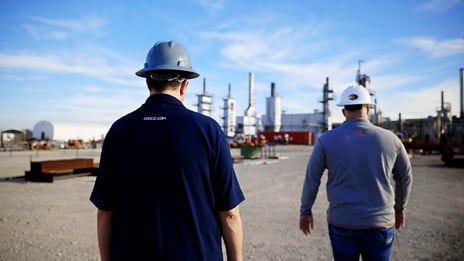
When you request an engineering study, Zeeco gathers and reviews all necessary information and can send a qualified combustion engineer with years of heater experience for a site visit. During the site visit, your specific needs are detailed and recorded while a Zeeco engineer inspects your equipment and understands your plant's process conditions and challenges. A report is then put together with recommendations for specific upgrades and changes to improve heater performance. Depending on the need, Zeeco can also run process simulations or Computational Fluid Dynamics (CFD) analysis to overcome constraints.

Solve for the Following Projects and Initiatives:
- NOx and CO Reduction
- Fuel change studies
- New operating conditions
- Debottlenecking
- Efficiency improvements
- Equipment repurposing
- Heater pulsation
- Transfer line revamping
- Safety system upgrades

How Does Zeeco Handle Heater Design Changes?
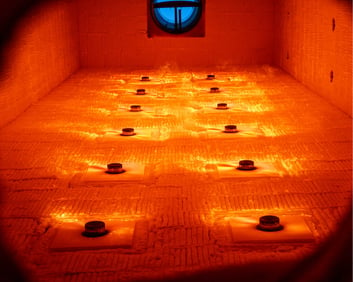
In situations where a full replacement isn't possible, Zeeco can change the design of your heater to meet desired performance requirements. These changes may include modifications to the heater floor to support a more efficient burner or a different layout, replacement of radiant and convection coils to increase capacity or improve efficiency and reduce CO2 emissions, additional instrumentation for improved heater control, and installation of an air preheat system, forced draft fans, or ductwork modifications to save fuel usage.
下载宣传册